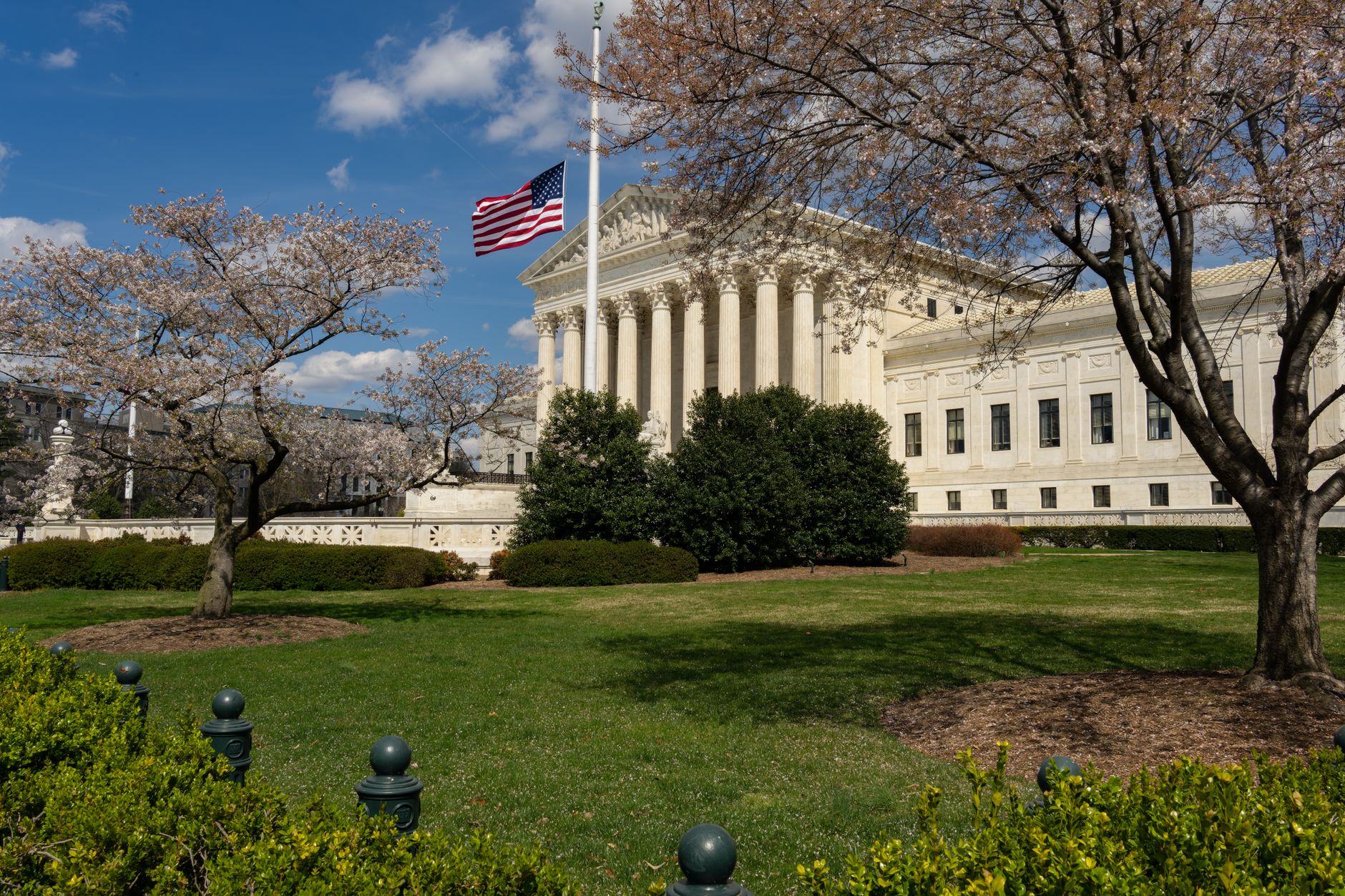
The US Supreme Court will hear oral arguments on May 15 regarding the federal government’s request to implement President Donald Trump’s executive order ending birthright citizenship—the constitutional guarantee that virtually all individuals born on US soil automatically become citizens. Oral arguments will be for three consolidated cases: Trump v. CASA, Inc., Trump v. Washington and Trump v. New Jersey.
Birthright citizenship stems from Section 1 of the Fourteenth Amendment to the US Constitution, which states that “[a]ll persons born or naturalized in the United States, and subject to the jurisdiction thereof, are citizens of the United States and of the State wherein they reside.” This amendment, ratified in 1868 following the Civil War, was intended to overrule the Supreme Court’s 1857 decision in Dred Scott v. Sandford, which held that Black people whose ancestors were brought to the United States as enslaved persons were not entitled to citizenship.
The Supreme Court solidified this interpretation in 1898 with United States v. Wong Kim Ark, ruling that a man born in San Francisco to Chinese immigrant parents was a US citizen under the Fourteenth Amendment. For over 125 years, this interpretation has remained largely unchallenged, with citizenship automatically granted to almost all individuals born on American soil, regardless of their parents’ citizenship or immigration status.
Related: Federal court ends decades‑long Louisiana school desegregation case
Trump’s Executive Order
President Trump issued an executive order declaring that individuals born in the United States will not automatically receive citizenship if their parents are in the country illegally or on temporary visas. This fulfilled a campaign promise from his successful 2024 presidential bid.
The order directly challenges the longstanding interpretation of the Fourteenth Amendment and the precedent established in Wong Kim Ark.
Legal Challenges
The executive order immediately prompted legal action across the country, with challengers arguing the order violates the longstanding interpretation of the Fourteenth Amendment and the precedent of Wong Kim Ark. Seattle Senior US District Judge John Coughenour blocked the order from being enforced throughout the country—what is called a nationwide injunction.
Related: Justices Weigh Trump Birthright Citizenship Policy
US District Judge Deborah Boardman in Maryland temporarily barred enforcement of the order there, in a lawsuit brought by immigrants’ rights groups and several pregnant women. Then, in Massachusetts, US District Judge Leo Sorokin granted a request from 18 states, the District of Columbia, and San Francisco to halt Trump’s order across the country.
Supreme Court Appeal
The US Supreme Court will hear oral arguments on May 15.
Legal Arguments and Implications
The Court’s decision could have significant implications for the concept of American citizenship, potentially affecting millions of future children born to non-citizens in the United States. The case also raises important issues about executive power, constitutional interpretation, and judicial authority to issue nationwide injunctions.
Related: HRW report reveals Minnesota raids violated human rights
The Supreme Court has allocated one hour for oral arguments on May 15, though the session will likely run longer given the case’s complexity and significance. A decision is expected by late June or early July 2025.
This case represents one of the most consequential challenges to established constitutional interpretation in decades, with profound implications for American identity and the meaning of citizenship itself. The Court’s ruling will likely have far-reaching consequences, and its impact will be closely watched by scholars, policymakers, and the general public alike.





Leave a Reply