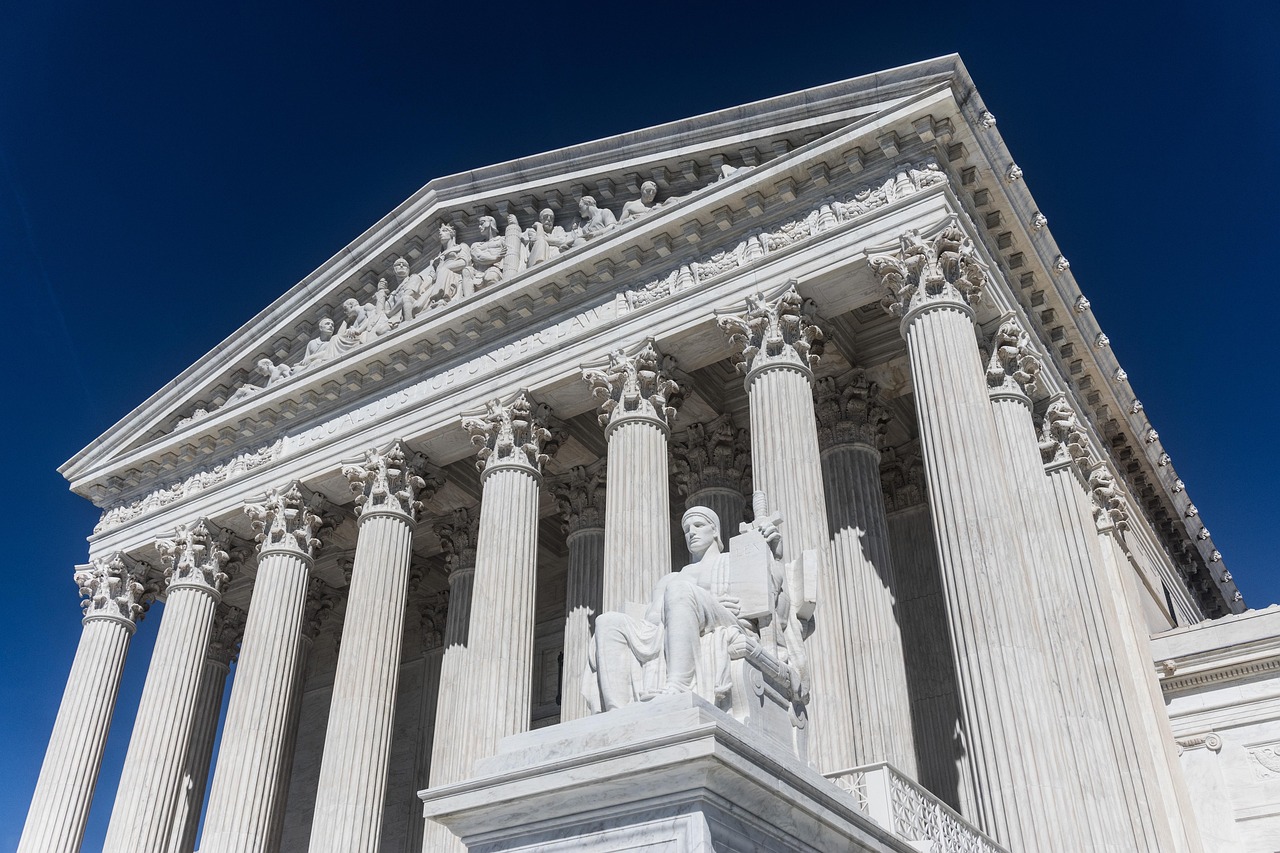
When a green‑card holder steps off a plane after a vacation or business trip, the expectation is simple: the border guard scans the chip, returns the passport, and the traveler proceeds onward. In practice, the process has become a legal battleground. The Supreme Court’s upcoming hearing in Blanche v. Lau will decide whether the presumption of admission that ordinarily shields returning lawful permanent residents can be removed the moment an immigration officer suspects a past crime, thrusting the individual onto the “inadmissible” track without clear and convincing proof of wrongdoing.
The outcome will shape DHS’s authority, affect the lives of millions of LPRs, and set a precedent for how the government balances national security concerns against the statutory rights of those already admitted.
Table of Contents
- The Legal Line Between Admission and Inadmissibility
- Statutory Framework: 8 U.S.C. §§ 1182 and 1227
- Facts of the Blanche v. Lau Case
- Second Circuit’s Reasoning and Its Implications
- How DHS Uses Parole and Deferred Inspection
- Comparison of Removal Tracks: Inadmissibility vs. Deportation
- Potential Outcomes for Green‑Card Holders After the Decision
- Practical Steps for Residents Facing Reentry Scrutiny
- Policy Debate: Balancing Security and Resident Rights
- Case Timeline from 2007 to Supreme Court Review
The Legal Line Between Admission and Inadmissibility
Under the Immigration and Nationality Act, a lawful permanent resident who returns from a temporary trip abroad is presumed to have been “admitted” at the moment of reentry. This presumption functions as a legal shortcut: the individual is treated as already inside the United States, and any removal proceeds under the deportation framework of 8 U.S.C. § 1227. The presumption is not absolute; it can be rebutted if the officer determines that the person is “seeking admission” rather than merely reentering. That distinction is the hinge on which the two removal tracks pivot.
When an LPR is classified as seeking admission, the government must invoke the inadmissibility provisions of 8 U.S.C. § 1182. The burden then shifts to DHS to prove, by clear and convincing evidence, that the individual has committed a disqualifying offense—such as a crime involving moral turpitude—at the time of entry. If the government cannot meet that evidentiary threshold, the presumption of admission remains intact, and the case proceeds under the less severe deportation regime. The procedural split matters because inadmissibility carries harsher penalties, including possible permanent bars, whereas deportation often allows for relief avenues like cancellation of removal.
Statutory Framework: 8 U.S.C. §§ 1182 and 1227
Section 1182 of the INA lists grounds of inadmissibility, ranging from health-related exclusions to criminal convictions. For lawful permanent residents, the most contested category is “crimes involving moral turpitude.” The Supreme Court has consistently required clear and convincing evidence before a person can be deemed inadmissible on criminal grounds. This standard is higher than the preponderance of the evidence test typically applied in criminal prosecutions, reflecting the heightened stakes of denying entry to someone who has already established residence.
Related: Tilburg boycott harms students not governments
In contrast, 8 U.S.C. § 1227 governs the removal of noncitizens who have been admitted but later fall foul of the law. The removal process under this provision allows for a broader range of defenses, including adjustment of status, asylum claims, and relief under the Convention Against Torture. Because the statute treats the individual as already “inside” the country, the procedural safeguards are more extensive, and the burden of proof rests largely on the government to demonstrate that removal is warranted.
The interplay between these two sections creates a legal fork in the road for returning green‑card holders. If DHS can present clear and convincing evidence of a disqualifying offense at the point of entry, the agency may bypass the deportation track and invoke the harsher inadmissibility provisions. Absent such proof, the presumption of admission stands, and the case proceeds under § 1227, where the resident retains access to a suite of relief options. The Supreme Court’s decision in Blanche v. Lau will clarify whether DHS can, in practice, shift the burden to the individual at the border, or whether the statutory safeguards of § 1182 must be respected before overturning the admission presumption.
Facts of the Blanche v. Lau Case
Muk Choi Lau entered the United States as a lawful permanent resident in 2007, receiving his green card after a routine adjustment of status. Five years later, New Jersey authorities charged him with trademark counterfeiting, an offense later classified as a crime involving moral turpitude. While the criminal case was pending, Lau traveled abroad for personal reasons and returned through John F. Kennedy International Airport. Instead of being processed as a returning resident, immigration officers placed him under parole for deferred inspection, effectively treating his arrival as a new admission. After the criminal case concluded with a guilty plea, the Department of Homeland Security invoked the inadmissibility provisions of the INA and issued a removal order, arguing that Lau’s conviction rendered him inadmissible. The central dispute revolved around whether DHS possessed the requisite clear and convincing evidence at the moment of Lau’s reentry to justify treating him as “seeking admission” rather than as a returning permanent resident.
Second Circuit’s Reasoning and Its Implications
How DHS Uses Parole and Deferred Inspection
When a lawful permanent resident arrives at a U.S. port of entry, Customs and Border Protection normally admits the traveler as a returning resident. In practice, officials may instead place the individual on parole—a temporary, discretionary permission to enter the United States while the government resolves a question about admissibility. Parole does not confer any lawful status, but it allows the person to remain in the country for a limited period, typically up to one year, pending a final determination.
Deferred inspection is the procedural mechanism that often accompanies parole. Under 8 C.F.R. § 245.1, CBP can issue a “deferred inspection notice” directing the traveler to appear at a designated immigration office within a set timeframe, usually 30 days. During this window, DHS may gather additional evidence, such as criminal records or immigration history, that were unavailable at the moment of entry. The traveler remains on parole, and any violation of the notice—failure to appear, new criminal conduct, or a change in circumstances—can trigger an immediate removal proceeding.
In the Blanche v. Lau docket, the government elected parole and deferred inspection for the respondent, arguing that the criminal allegations against him were insufficient to meet the “clear and convincing” standard required for an immediate inadmissibility finding. The decision to use parole, rather than an outright admission, effectively shifted the burden to the resident to prove that the pending charges do not rise to the level of a disqualifying offense under 8 U.S.C. § 1182. This procedural choice is now the fulcrum of the Supreme Court’s review, with the outcome likely to shape how DHS treats returning green‑card holders in similar circumstances.
Related: Court Rules Streamers Are Independent Contractors
Comparison of Removal Tracks: Inadmissibility vs. Deportation
The distinction between inadmissibility and deportation hinges on whether an individual is deemed to have “entered” the United States as a noncitizen or is treated as a returning resident who later becomes removable. Inadmissibility proceedings, grounded in 8 U.S.C. § 1182, require the government to establish the existence of a disqualifying ground—often a criminal conviction—by a preponderance of the evidence, but the burden of proof can be higher when the government relies on alleged conduct rather than a final conviction. Deportation, governed by 8 U.S.C. § 1227, applies to individuals who have already been admitted; the government must show that the person committed a removable offense, and the standard is generally lower because the admission itself is presumed valid.
| Aspect | Inadmissibility (§ 1182) | Deportation (§ 1227) | Typical Outcome |
|---|---|---|---|
| Legal basis | Grounds for exclusion at the point of entry | Grounds for removal after admission | Either removal or denial of entry |
| Evidence required | Clear and convincing evidence of a disqualifying offense | Preponderance of evidence of a removable offense | Deportation often proceeds after conviction |
| Procedural trigger | Parole or deferred inspection at entry | Final order of removal after admission | Deportation may involve a removal hearing |
| Impact on status | Never admitted; may be barred from future entry | Loss of lawful permanent residence; possible ban | Potential 10‑year bar after removal |
| Remedies | Waiver of inadmissibility, motion to reopen | Cancellation of removal, adjustment of status | Petition for reinstatement of LPR status |
The Supreme Court’s decision will clarify whether DHS can place a returning green‑card holder on the inadmissibility track without possessing clear and convincing evidence at the moment of reentry. Until that guidance is issued, agencies continue to rely on the procedural split, weighing the evidentiary burden and the potential for a permanent bar against the administrative convenience of parole and deferred inspection.
Potential Outcomes for Green‑Card Holders After the Decision
If the justices side with the Department of Homeland Security, the agency will be able to place returning green‑card holders on the inadmissibility track without first producing clear and convincing evidence of a disqualifying crime. In practice, that would mean more LPRs could be removed under 8 U.S.C. § 1182, a faster process that bypasses many of the procedural safeguards built into the deportation track of 8 U.S.C. § 1227. The effect would be a noticeable uptick in removals at ports of entry, especially for individuals with pending criminal matters or prior convictions that DHS deems “crimes involving moral turpitude.”
A decision requiring DHS to present clear and convincing evidence at the border would force the agency to shift many cases to the deportation track. Those proceedings afford respondents the right to a hearing before an immigration judge, the ability to raise defenses such as hardship or discretion, and generally longer timelines for resolution. The practical outcome would be a slowdown in removals, but also a more predictable legal pathway for green‑card holders who travel abroad and return. Either way, the Court’s interpretation will directly shape how often lawful permanent residents find themselves caught in removal proceedings the moment they step off a plane.
Practical Steps for Residents Facing Reentry Scrutiny
Because the stakes of a border encounter can change dramatically after the Supreme Court’s decision, green‑card holders should adopt a disciplined approach to documentation and legal preparedness. First, keep the physical green card, passport, and any recent travel documents in a single, easily accessible location. A digital copy stored on a secure cloud service can serve as a backup, but the original papers remain the primary proof of status.
Second, maintain an up‑to‑date record of any criminal history, including docket numbers, sentencing documents, and proof of completed rehabilitation programs. Even minor infractions can trigger a discretionary review, so having the full picture ready can help counsel argue that the conduct does not rise to the level of inadmissibility.
Related: Appellate Courts Reinforce Evidence Reweighing Limits
Before embarking on any international trip, consult an immigration attorney familiar with the latest case law. A brief pre‑travel consultation can identify potential red flags and suggest whether filing a request for advance parole or a pre‑clearance application is advisable. While the immigration system does not offer a universal pre‑clearance mechanism, certain categories, such as refugees or individuals with pending asylum claims, may qualify for a limited travel document that smooths reentry. If a trip is unavoidable and the risk of detention appears high, an attorney can draft a “letter of explanation” that outlines the purpose of travel, ties to the United States, and any mitigating factors related to past offenses.
Finally, consider enrolling in a reputable legal assistance program that offers rapid response services at ports of entry. Organizations such as the American Immigration Lawyers Association provide directories of attorneys who can be contacted on short notice. Having a trusted lawyer’s contact information on hand can reduce the time spent in deferred inspection and increase the likelihood of a favorable outcome. In the post‑decision environment, proactive preparation will be the most reliable safeguard against an unexpected shift from a routine return to a formal removal proceeding.
Policy Debate: Balancing Security and Resident Rights
The core of the dispute is whether the government may treat a returning lawful permanent resident as “seeking admission” without the stringent standard of clear‑and‑convincing evidence that a disqualifying crime has occurred. Proponents of broad DHS authority argue that the ability to place a green‑card holder on the inadmissibility track is a useful tool for preventing individuals with alleged criminal conduct from slipping back into the United States unnoticed. They cite the need for rapid response to emerging threats, especially in cases involving fraud, terrorism‑related activity, or other offenses that could jeopardize public safety.
Opponents counter that the presumption of admission for returning LPRs is a hard‑won protection embedded in the Immigration and Nationality Act. Removing that presumption without solid proof erodes due‑process safeguards, forces residents into removal proceedings on speculative grounds, and creates a chilling effect on legitimate travel. Civil‑rights groups warn that the decision could set a precedent for expanding DHS’s discretionary power, prompting Congress to draft legislation that codifies a lower evidentiary threshold for inadmissibility.
Whatever the Court decides will reverberate through future immigration bills. A ruling that upholds the current standard would likely preserve the status‑quo, encouraging lawmakers to focus on targeted reforms rather than sweeping changes. Conversely, a decision that relaxes the evidentiary requirement could inspire Congress to draft broader statutes, reshaping the balance between national security and the rights of permanent residents.
Case Timeline from 2007 to Supreme Court Review
- 2007 – Muk Choi Lau is granted lawful permanent residency, establishing his status as a green‑card holder.
- 2012 – Lau is charged in New Jersey with trademark counterfeiting; he departs the United States for a brief trip abroad.
- 2013 – Upon returning through JFK Airport, immigration officials place Lau under parole for deferred inspection rather than admitting him as a returning resident.
- 2025 – The Second Circuit vacates the inadmissibility removal order, finding that at the time of reentry DHS possessed only criminal accusations, not clear‑and‑convincing evidence of a disqualifying offense.
- 2026 – On January 9, the Supreme Court grants certiorari to review the case; oral arguments are set for April 22.
Frequently Asked Questions
What legal basis does the Supreme Court consider when reviewing DHS’s authority over returning green‑card holders?
The Court examines the Immigration and Nationality Act, especially sections that grant DHS discretion to suspend or revoke lawful permanent resident status, and evaluates whether those provisions comply with the Constitution’s due‑process and equal‑protection guarantees.
Will the Supreme Court likely uphold DHS’s power to deny re‑entry to green‑card holders who have been abroad for extended periods?
The Court may uphold DHS’s authority if it finds the statutory language clear and the agency’s actions reasonably related to national‑security interests, but it could also impose procedural safeguards to protect residents’ due‑process rights.
How does the “presumption of abandonment” rule factor into the Court’s decision?
The presumption of abandonment—where a green‑card holder is considered to have relinquished status after a year abroad—will be scrutinized to see if the rule is applied uniformly and whether it provides adequate notice and a chance to contest the presumption.
What role does the Administrative Procedure Act (APA) play in the Supreme Court’s analysis?
The Court will assess whether DHS’s actions are “arbitrary or capricious” under the APA, requiring the agency to provide a reasoned explanation for any denial of re‑entry and to follow proper procedural steps.
Can green‑card holders appeal DHS decisions before the Supreme Court?
Appeals to the Supreme Court are limited to cases that have progressed through lower courts; green‑card holders must first seek relief through DHS’s administrative appeals and federal district courts before a petition for certiorari can be considered.
Will the Supreme Court’s ruling affect the “continuous residence” requirement for naturalization?
While the decision primarily addresses re‑entry authority, any clarification on what constitutes abandonment could indirectly influence how continuous residence is evaluated for naturalization, especially for those who travel frequently.
Does the Court consider international law or treaties when deciding on DHS’s powers?
The Court may reference international agreements, such as the 1965 Immigration and Nationality Act amendments, but it is not bound by them; its primary focus remains on domestic statutes and constitutional constraints.
What practical steps should returning green‑card holders take while the Supreme Court case is pending?
They should maintain documentation of ties to the U.S., be prepared to present evidence of intent to retain residency, and consider consulting an immigration attorney to navigate potential DHS inquiries or denials.





Leave a Reply