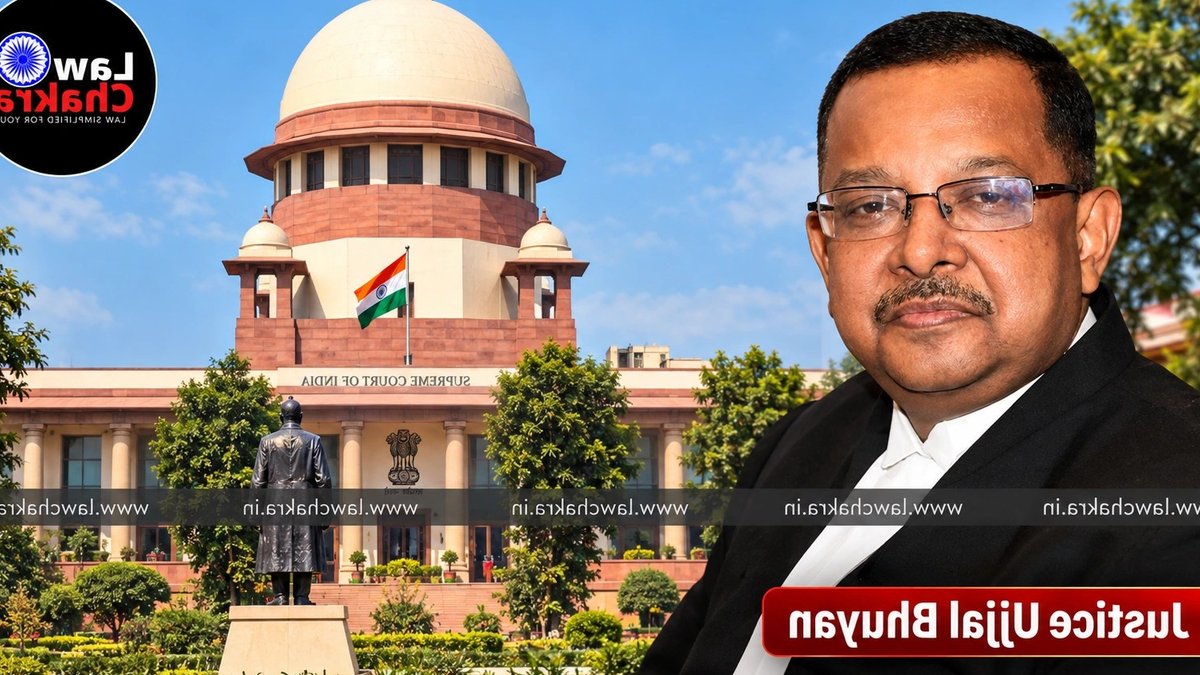
A sitting judge of India’s Supreme Court has warned of a rise in extra-judicial killings and police violence. Justice Ujjal Bhuyan questioned the practice of taking accused persons out at odd hours, like 3 a.m., to recreate crime scenes.
Speaking at a discourse on ethics in criminal litigation in New Delhi, Justice Bhuyan expressed concern over the increasing incidents of custodial violence. He said, “I thought custodial violence was a thing of the past. But I was forced to reconsider it. Extra-judicial killings are on the rise in India.”
Unusual Hours and Recurring Explanations
The judge asked why such exercises must occur at unusual hours when no urgency was apparent. “Why do you have to take an accused in police custody to recreate a crime scene at 3 o’clock in the morning? Could you not have waited till sunrise? What is the grave urgency?” he asked.
Justice Bhuyan also highlighted the recurring explanations that follow deaths in custody, such as the accused trying to snatch a rifle, a scuffle leading to firing, or being hit by a speeding truck. He mentioned a case where an accused was said to have jumped into a well due to depression.
Such incidents, he said, lead right-thinking people to wonder whether shortcuts are being taken to cover up gaps in investigations. “Right thinking people are forced to think that is it a way to cover up the lacuna in investigation, knowing fully well the outcome of trial, these shortcut methods are adopted.”
Constitutional Concerns and Police Conduct
Justice Bhuyan emphasized that such practices are inconsistent with India’s constitutional framework. “Our constitutional system does not approve of these type of situations,” he said.
The judge also raised concerns about young IPS officers personally attacking demonstrators with anger. What for? You are a professional police officer, why do you need to get so agitated? Beating up a demonstrator with bare hands.”
Related Post: Supreme Court Broadens Eligibility for Women in Bar Councils
This behavior, he noted, raises serious concerns about the treatment of individuals in police custody, especially at night. “One shudders to think what would happen if such a police officer gets custody at night… Many of us are quite wary of sending people to police custody, not for nothing.”
The remarks are significant as they come from a sitting Supreme Court judge, who framed the issue within the constitutional framework. The Constitution guarantees that no person may be deprived of life except through the procedure established by law.
Justice Bhuyan’s questions about the timing of crime-scene reconstructions and the recurring explanations for custodial deaths challenge the credibility of official accounts. These concerns are part of a broader judicial scrutiny of encounter deaths and police narratives.
It bears emphasis that these were observations at a public discourse, not rulings in a case, and they were framed as questions that “right thinking people” are led to ask rather than as findings that any specific death was unlawful.
Judicial Scrutiny and Accountability
The Supreme Court’s guidelines in the PUCL case require an independent investigation into every encounter death, and several High Courts have questioned stereotyped police versions of how a person in custody came to die.
The discourse, organized by the Centre for Discourse on Criminal and Constitutional Jurisprudence, provided a platform for these critical issues to be addressed publicly. While the remarks do not constitute a ruling, they carry significant weight, coming from a sitting Supreme Court judge.





Leave a Reply