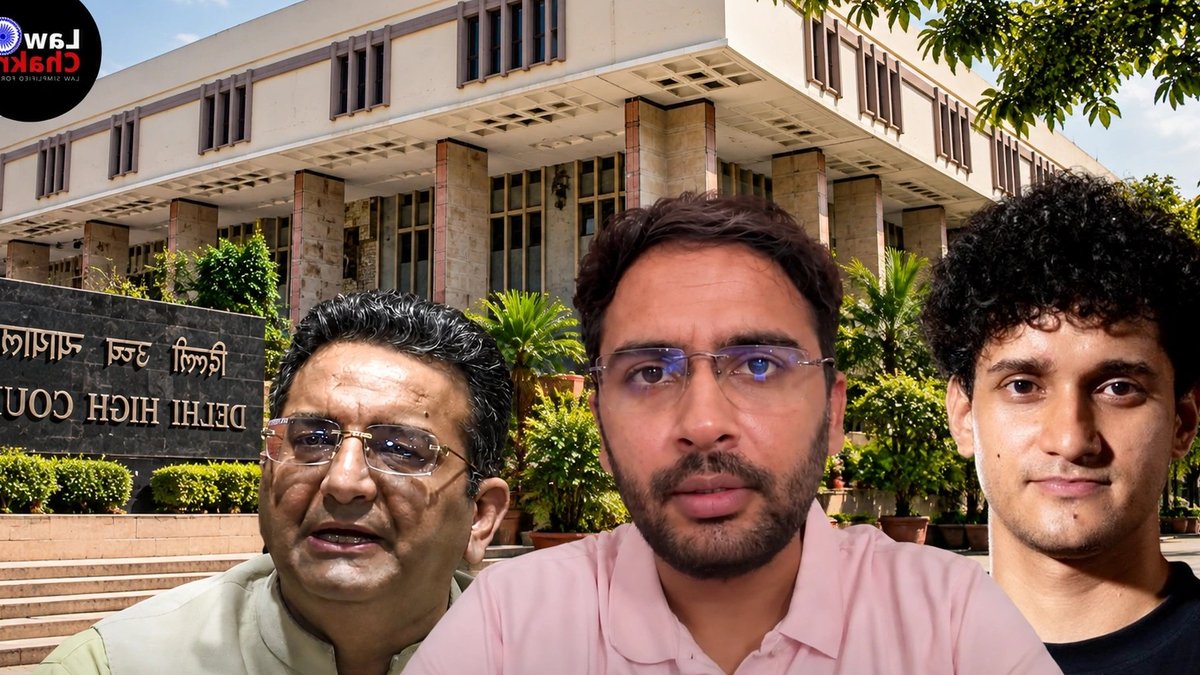
A Delhi High Court hearing examined the boundaries of social media attacks when posts lack verification, following a lawsuit by senior advocate and BJP leader Gaurav Bhatia against three Cockroach Janta Party (CJP) members over an allegedly AI-generated tweet falsely attributing remarks to him.
Justice Tushar Rao Gedela remarked that spreading unverified accusations online is unacceptable and suggested the defendants—Saurav Das and Ashutosh Ranka—take down the posts voluntarily instead of facing a court-mandated deletion. The third defendant, Abhijit Dipke, was not directly linked to the disputed content.
The case: AI-generated content and defamation
The dispute originated from a September 5 post on X (formerly Twitter) related to the arrest of Swatantra Bhardwaj, who was accused of assaulting a teenage CJP protester. Bhatia’s legal action claims the tweet was AI-generated, falsely presenting him as making statements he never issued alongside his photograph to create a misleading connection. The plaintiff is seeking Rs. 2 crore in damages, framing the incident as part of a broader campaign of defamatory attacks by the CJP against the judiciary.
The court did not review the specific claims in the tweet, as Bhatia’s defense rests on denying he ever made the attributed statements. The allegations remain unproven, and no formal findings have been recorded. The hearing addressed procedural steps rather than substantive judgments.
Judicial response and conciliation
Justice Gedela adopted a measured approach, urging the defendants to self-correct rather than impose a court order. He stated that while protest methods vary, unverified attacks are inappropriate. “If you are willing to take down on your own, put your replies,” he instructed.
When Das’s legal representative argued the tweet had already been deleted, the judge acknowledged other posts by the defendants and warned against unchecked expression. “You have right to express, but sometimes expressions need to be put in a more articulate manner, so that the intention goes in the right way,” he noted, acknowledging the defendants’ status as young activists.
The judge also suggested Bhatia could have resolved the issue privately, but the plaintiff insisted on legal action due to the defendants’ large following and the need to protect his reputation. The court declined to order an immediate takedown, instead asking counsel to report whether the defendants would comply voluntarily.
Regarding Dipke, the court confirmed he was not accused and allowed his removal from the case, as the lawsuit targeted only Das and Ranka. The hearing concluded with the judge advising the defendants: “Take instructions and come back. You are youngsters, you have a long way to go. Why do you want to spend time in courts?” The next steps depend on whether they remove the posts or if the case proceeds to a full hearing.
Legal and societal consequences
This case intersects with two key legal issues: defamation through synthetic or AI-generated content, and the distinction between protected criticism and false claims. Bhatia’s argument focuses on the harm of fabricating a statement and linking it to his identity, a clear violation of defamation law. Indian legal standards differentiate between fair criticism—protected—and false factual claims, which are not.
The court’s emphasis on voluntary compliance over judicial suppression reflects a broader trend of avoiding prior-restraint orders on speech at early stages. Judges frequently encourage self-regulation, framing disputes as matters of restraint and verification. Whether the defendants accept this approach or if the court must intervene remains uncertain. The claims of defamation and a coordinated attack on institutions are still unproven.
AI-generated content complicates defamation claims by obscuring the line between opinion and fabricated fact. Unlike traditional defamation, where intent and harm are debated, AI posts can cause lasting reputational damage by falsely associating individuals with statements they never made.
The next court session will determine whether the defendants comply voluntarily or if the legal dispute escalates. For now, the focus remains on balancing social media activism with accountability when unverified claims are made.
The case also raises questions about the role of technology in legal disputes, particularly when artificial intelligence is used to create misleading content. The defendants’ actions highlight the challenges of verifying online claims in an era where deepfakes and AI tools can spread false information rapidly.
Bhatia’s legal team has framed the dispute as part of a larger pattern, alleging that the CJP has repeatedly targeted judicial figures through fabricated social media posts. The court’s handling of this case could set a precedent for how such disputes are resolved, particularly when AI-generated content is involved.
The defendants’ decision to either remove the posts or face further legal action will shape the outcome. If they comply, the matter may be resolved without a formal ruling. If not, the court may need to address the merits of the defamation claim, including whether the AI-generated tweet meets the legal threshold for actionable harm.
The hearing also showed the need for greater responsibility in online discourse, particularly among activists and political groups. The judge’s remarks suggested that while free expression is protected, it must be exercised with care to avoid causing harm to others.





Leave a Reply