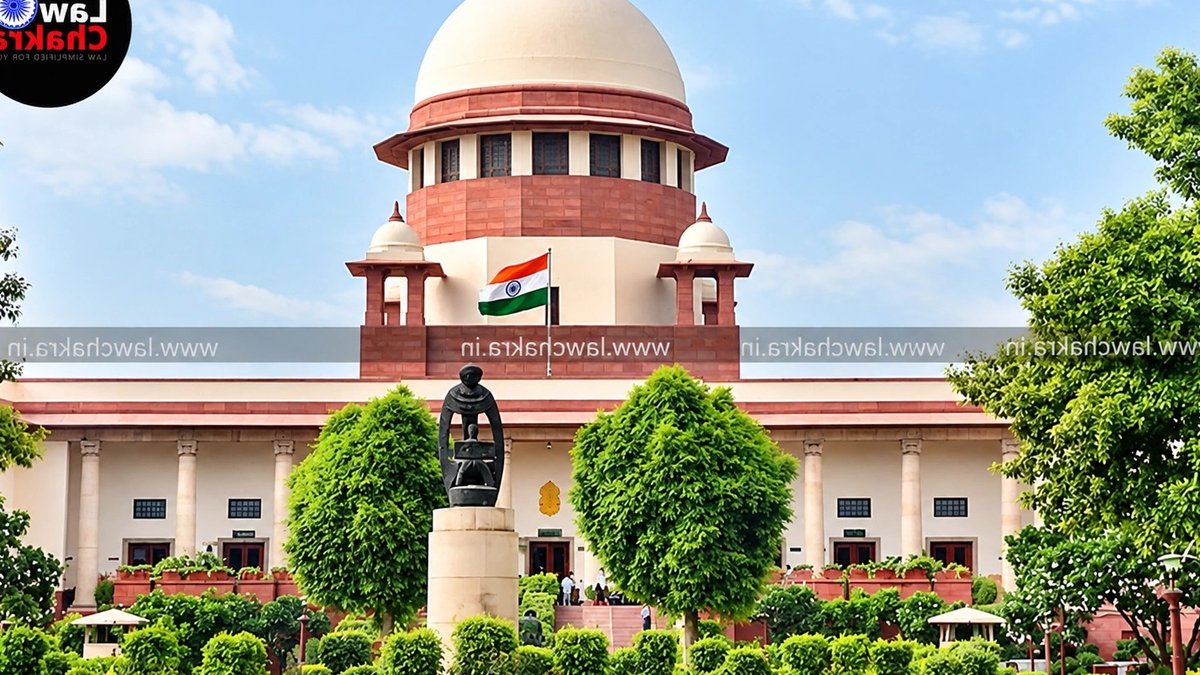
The Supreme Court has clarified its scheme for ensuring 30% representation of women in State Bar Councils, ruling that a “senior” woman advocate eligible for co-option need not be a designated senior advocate, and that women who contested Bar Council elections but were unsuccessful are also eligible for co-option.
The Court held that a former High Court judge is not disqualified from co-option, as becoming a member of the Council does not require resuming practice before the High Court, so the constitutional bar in Article 220 is not attracted.
Clarifications on eligibility and co-option process
A Bench of Chief Justice of India Surya Kant, Justice Joymalya Bagchi, and Justice V. Mohana disposed of a batch of miscellaneous applications seeking modification of its earlier order in Swati Sinha and Others v. Union of India and Others.
By an order of December 2025, the Court had directed that 30% of the total seats in each State Bar Council be represented by women members of the Bar Associations, with 20% filled by election and 10% by co-option. The Chief Justices of the jurisdictional High Courts were authorized to nominate the co-opted women members.
The present applications sought to modify that method, some seeking that the elected members themselves elect the co-opted members, or that the co-opted seats go to the unsuccessful women candidates. The applications also raised questions about eligibility, the meaning of “senior,” and whether a former High Court judge could be nominated.
The Court declined to alter the co-option mechanism it had settled, but resolved the doubts raised around it. On eligibility, it reiterated its earlier clarification that women advocates who contested the State Bar Council elections but were unsuccessful are also eligible for nomination by co-option, so that an electoral defeat does not shut a candidate out of the reserved co-opted seats.
Defining “senior” and the role of former judges
On the meaning of “senior,” the Court was explicit that the word was not confined to designated senior advocates: “…the use of the word ‘senior’ in para 3 of the said order is not to be construed as only those persons who are designated as ‘senior advocates’. Rather, it means someone who has been in practice for a substantially long period of time and is found suitable by the elected members of the SBC as well as shortlisted by the Chief Justice of the respective High Court.
On the position of former judges, the Court held that the bar in Article 220 of the Constitution, which restrains a person who has held office as a permanent judge of a High Court from pleading before that court, is no impediment to their co-option to the State Bar Council. By becoming a member of the Council, the Court reasoned, a former judge is not required to resume practice before the High Court, so the constitutional bar is not attracted.
The Court clarified a point specific to the State Bar Council of Tripura: since it comprises only fifteen members, only one woman member would be co-opted there, rather than two.
A court-created mechanism, until the legislature or the executive provides one, the Court framed the initiative in broader terms. It reiterated that ensuring adequate representation for women members of the Bar was done for the first time and was a welcome step. While acknowledging that it is difficult to ensure nomination for all, the Court expressed the belief that this court-created mechanism would encourage women lawyers to come forward and contest Bar Council elections. It added that, in due course, it expected Parliament and the executive authorities to provide an appropriate mechanism for women’s representation in the Bar Councils, and that until then the present mechanism would continue to remain in force.





Leave a Reply