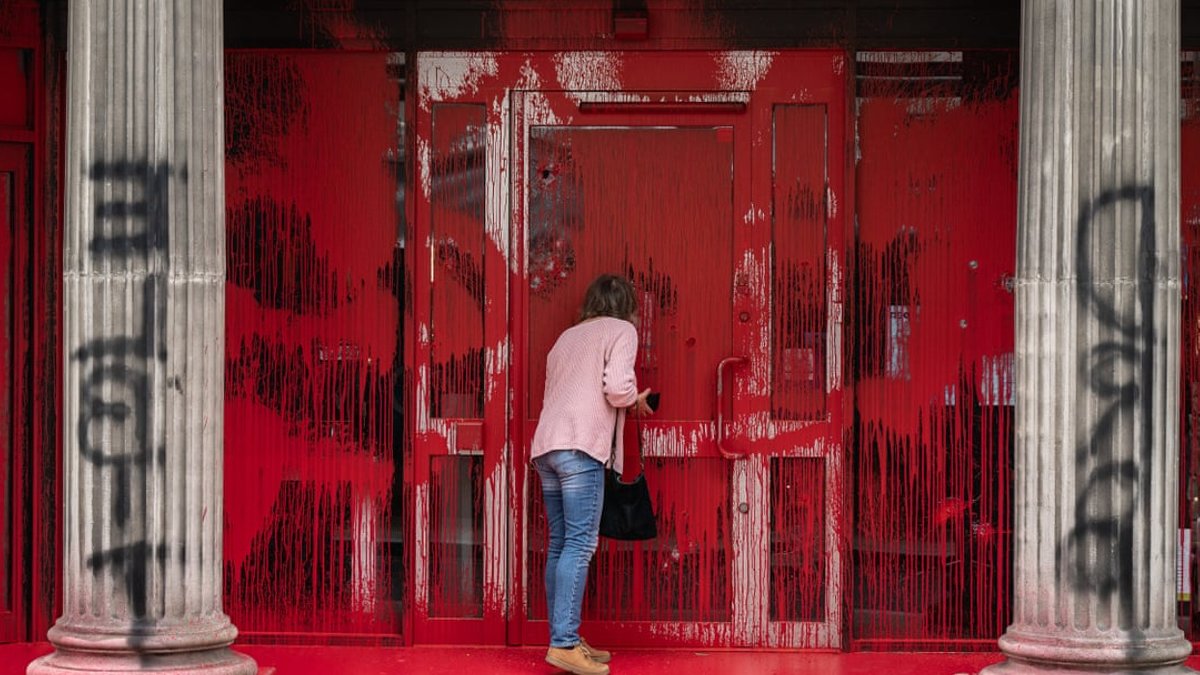
Five activists from Palestine Action face potential terrorism sentencing for damaging a Barclays Bank branch in Lancashire. Critics argue the move threatens political protest rights in the UK.
The defendants—Brendon O’Hagan, Amanda Kelly, Hmeera Atiqnisar, Mohammed Malik, and Alma Yaniv—were convicted last month of causing £212,000 in damage during an August 2024 protest in Burnley. They targeted the bank over its financial ties to Elbit Systems, an Israeli weapons manufacturer.
Judge considers terrorism link after verdict
After the jury returned guilty verdicts, Judge Philip Parry announced plans to examine whether the offense had a terrorist connection. Neither the jury nor the defendants had been informed this was possible during the trial.
Related: Hospitals under fire across Ukraine, Sudan, Gaza
Parry referenced a ruling by Mr. Justice Johnson, who last month classified property damage by Palestine Action activists as terrorism for the first time. That decision involved four other activists convicted of raiding Elbit’s Filton factory near Bristol. Parry included Johnson’s judgment in his request for legal submissions in the Barclays case.
Malik described the move as excessive. “The judge and prosecutors now want to label us terrorists for red paint and broken windows,” he said. “This exceeds the original charges and raises concerns about using counter-terrorism laws to punish dissent.”
The Crown Prosecution Service argued the terrorist connection stemmed from statements made during the trial, including the defendants’ affiliation with Palestine Action and the protest’s role in a broader campaign against the bank. The CPS had not mentioned terrorism charges before or during the trial.
Huda Ammori, a co-founder of the group, said the case reflected consequences of Johnson’s earlier ruling. The protest occurred before Palestine Action was banned as a terrorist organization, and the Home Office never classified the incident as terrorism.
Related: Choosing the Right Family Law Attorney for Your Situation
Critics warn of legal overreach
Human rights organizations and politicians have condemned the use of terrorism laws against protesters. Akiko Hart of Liberty said the case revealed flaws in UK counter-terror legislation, which now covers actions most people would not associate with terrorism.
Labour MP John McDonnell called the practice an attempt to silence opposition to the war in Gaza. He stated that sentencing activists under terrorism laws, rather than standard criminal statutes, was unjust.
Differences in treatment between climate activists and Palestine Action protesters have attracted attention. In 2023, seven Extinction Rebellion activists received suspended sentences for causing over £100,000 in damage at Barclays’ London headquarters. No terrorism connection was applied in that case.
Related: Tilburg boycott harms students not governments
The Filton activists convicted of terrorism offenses received prison terms and will face 15 years of notification requirements upon release. These include mandatory reporting of any new device, relationship, or address to police. To qualify for parole, they must disavow their political views.
Terrorism sentences require defendants to serve at least two-thirds of their term, longer than standard prison sentences. Amnesty International and Liberty have criticized the use of these powers, calling it a misuse of the law.
It was reported in October 2024 that Barclays had sold all its Elbit shares. The bank had previously said it held them only in relation to client driven transactions.





Leave a Reply