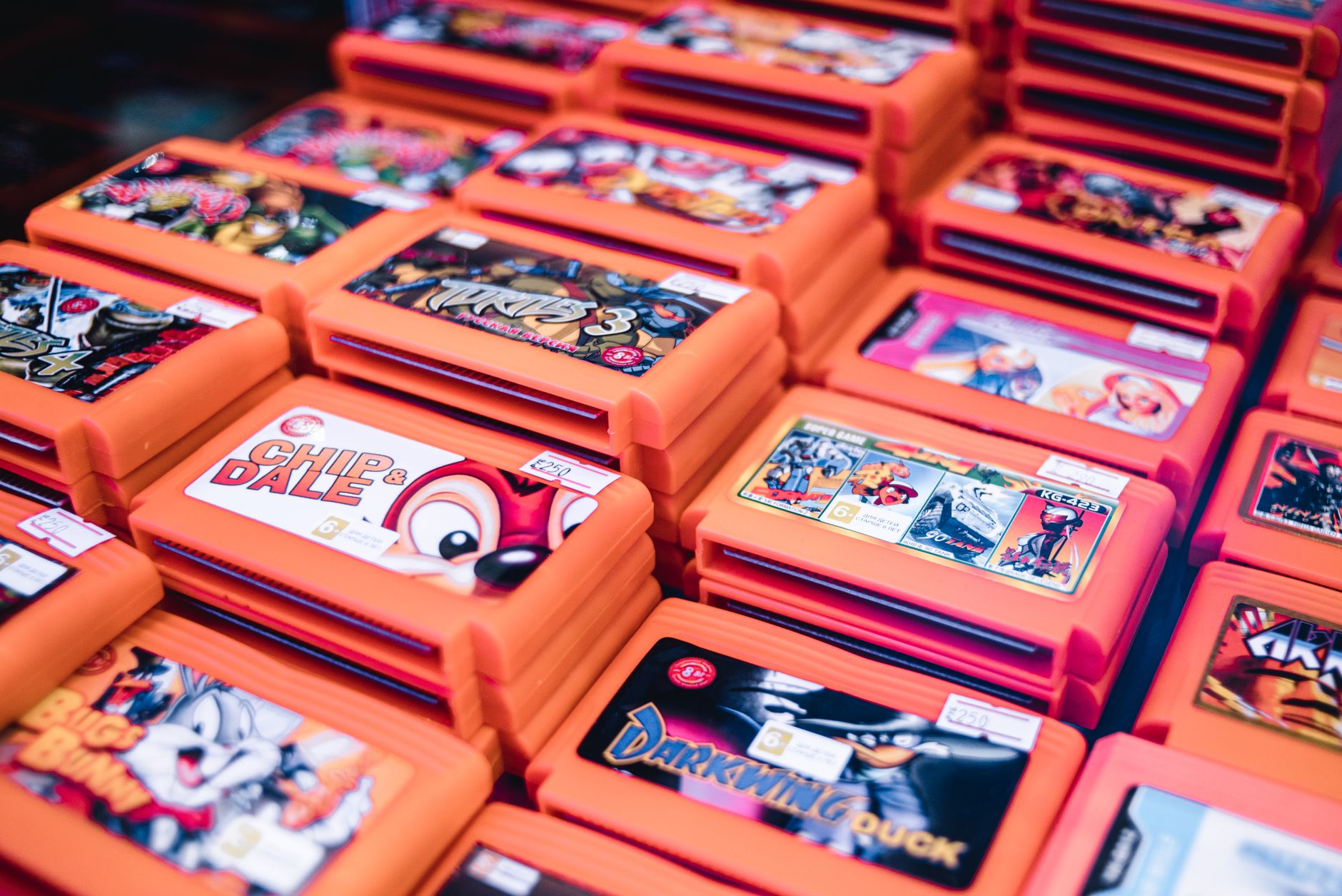
In an era defined by hyper-realistic 4K graphics, ray-tracing, and sprawling open worlds that take months to explore, the humble charm of retrogames remains an unshakable pillar of the gaming community. There is a peculiar magic in the flickering glow of a CRT television and the tactile “thunk” of a plastic cartridge clicking into a console. While modern gaming pushes the boundaries of what is technologically possible, retrogaming pulls at something deeper—a combination of pure mechanical mastery, artistic ingenuity born of limitation, and a powerful dose of nostalgia that transcends generations.
The Art of Constraint: Beauty in Every Pixel
To understand the enduring appeal of the retro era, we must first appreciate the “Art of Constraint.” Early developers didn’t have the luxury of gigabytes of RAM or cinematic motion capture. In the 8-bit and 16-bit eras, every single pixel was a precious commodity. If a character needed to look heroic, the artist had to convey that through a 16×16 grid and a palette of maybe three or four colors.
This technical bottleneck forced a level of creativity that we rarely see in the “unlimited” landscape of modern AAA development. Think of the iconic design of Mario: his mustache was added because it was easier to see than a mouth, and his hat was a solution to the difficulty of animating hair. These legendary designs weren’t just aesthetic choices; they were brilliant workarounds for technical hurdles. This clarity of design is why these characters remain more recognizable than the photorealistic protagonists of today.
The “Nintendo Hard” Philosophy
There is a common saying among veterans: “They don’t make them like they used to.” While modern games often focus on “accessibility” and “player retention” through constant checkpoints and hand-holding, retrogames were notoriously unapologetic.
The term “Nintendo Hard” exists for a reason. Titles like Contra, Mega Man, and Ghosts ‘n Goblins demanded perfection. In the absence of 60-hour narratives, developers increased the longevity of games through sheer difficulty. This created a unique “flow state” for players. Winning didn’t just mean you reached the end of a story; it meant you had mastered a craft. You had memorized enemy patterns, perfected your timing to the millisecond, and overcome a digital adversary that gave no quarter. That sense of accomplishment is a “high” that many modern gamers are rediscovering through the “Soulslike” genre, which is essentially a love letter to the punishing logic of the 80s.
The Soundtrack of a Generation
We cannot talk about the retro experience without mentioning the music. Limited by simple sound chips (like the NES’s Ricoh 2A03), composers like Koji Kondo and Nobuo Uematsu couldn’t rely on orchestral swells or vocal tracks. Instead, they had to write melodies so catchy and structurally sound that they could be looped indefinitely without becoming annoying.
These “chiptunes” became the heartbeat of the industry. The Super Mario Bros. theme or the Legend of Zelda overworld march are arguably more culturally significant than most Top 40 hits from the same era. Today, the influence of these bleeps and bloops can be found everywhere, from modern synth-wave music to the soundtracks of indie darlings like Shovel Knight and Undertale.
The Social Fabric: From Arcades to Couch Co-op
Before the internet made gaming a solitary-yet-connected experience, gaming was inherently social and physical. Retrogaming reminds us of the “Arcade Era”—a time when high scores were a form of local currency and the neighborhood’s best player was a local celebrity.
Even as gaming moved into the home, it remained a “couch” experience. The era of the SNES, Genesis, and N64 was the golden age of local multiplayer. There was a specific energy in sitting next to a friend, trading insults during a match of Street Fighter II or ruining friendships over a Blue Shell in Mario Kart 64. Retrogames preserve this proximity. They remind us that gaming is, at its heart, a way to connect with the people sitting right next to us.
The Modern Renaissance: Collecting and Emulation
Interestingly, the market for retrogaming has never been hotter. What started as a niche hobby for nostalgic adults has exploded into a massive industry.
| Category | Popularity Factor | Why It Matters |
| Physical Collecting | Tangibility | Owning a piece of history you can touch and display. |
| Emulation | Accessibility | Allowing a new generation to play “lost” classics on modern hardware. |
| Indie “Retro-Styled” | Evolution | New games that use old aesthetics to tell modern stories. |
However, this boom brings its own set of challenges. As the prices of original hardware and rare cartridges skyrocket, the conversation around Digital Preservation becomes vital. Many of these games exist on aging magnetic media and rotting capacitors. The retrogaming community isn’t just playing games; they are acting as digital archeologists, ensuring that the foundations of the medium aren’t lost to time and corporate indifference.
Why It Still Matters
So, why do we keep going back? Is it just rose-tinted glasses?
Not quite. Retrogaming offers a “purity” of experience. In a world of “Games as a Service,” microtransactions, and 100GB day-one patches, there is something incredibly refreshing about a game that is finished the moment you buy it. You plug it in, you press start, and you are playing. There are no battle passes, no DLC maps, and no internet connection required.
Furthermore, these games represent the “First Principles” of game design. Much like a film student studies the silent era or a musician studies the classics, a gamer or developer looks to the retro era to understand the core mechanics of movement, feedback, and level design.
The Loop Never Ends
The world of retrogames is not a museum of dead ideas; it is a living, breathing library of inspiration. Whether it’s the pixel art that continues to influence modern aesthetics or the “pick-up-and-play” philosophy that dominates the mobile gaming market, the DNA of the 80s and 90s is everywhere.
As we look toward the future of VR and AI-driven narratives, it’s worth keeping that old console plugged in. Sometimes, to see where we’re going, we need to remember the simple joy of a well-timed jump and the iconic sound of a power-up.