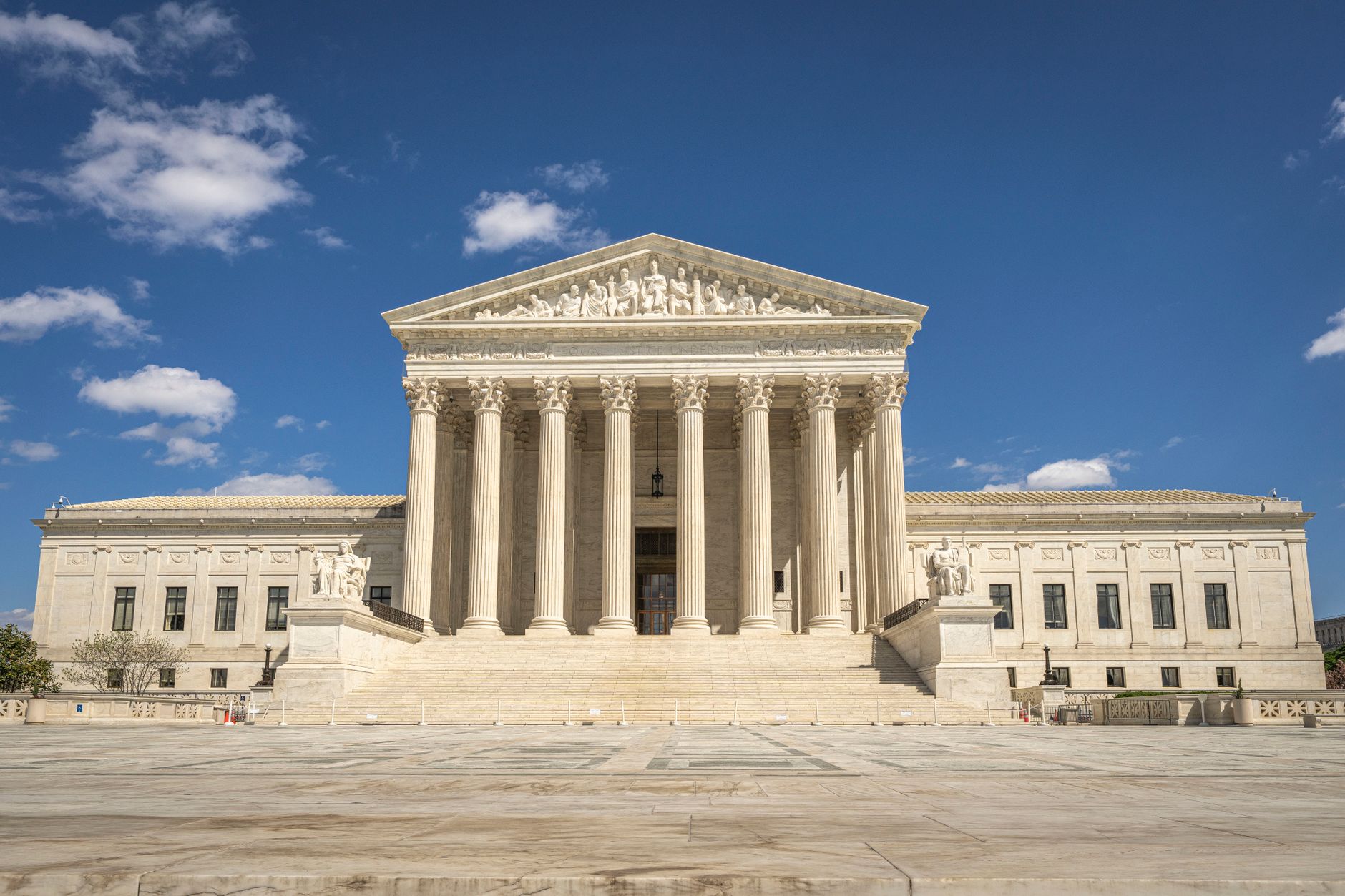
The Supreme Court heard oral arguments Thursday regarding President Trump’s executive order purporting to end birthright citizenship, a measure currently blocked by numerous lower courts through nationwide injunctions. While the specific question before the justices is procedural—focusing on the validity of these injunctions—the debate quickly shifted to whether the order itself violates the Constitution. The court’s conservative majority seems less interested in the logistics and more interested in the history books.
Arguments over History and Procedure
U.S. Solicitor General D. John Sauer argued first for the Trump Administration. Sauer maintained that nationwide injunctions contradict equitable tradition by applying to people not involved in the lawsuits. The attorney invoked constitutional originalism, suggesting the 14th Amendment was intended only for the children of former enslaved persons in the United States. Sauer also noted that these injunctions are a bipartisan problem that “exceed judicial power” and prevent the “percolation” of novel legal questions.
Justices were split on these historical arguments. Justice Clarence Thomas questioned if nationwide injunctions have a historical analog, signaling that the procedural issue might be harder for the government to win than it thinks. Justice Sonia Sotomayor pushed back forcefully, emphasizing that the order likely violates at least four Supreme Court precedents established over time. Chief Justice John Roberts seemed to value Sauer’s efficiency arguments, pointing out that the TikTok case was decided in just 19 days. The situation presents a catch-22, as the procedural rules might inadvertently protect the very thing the government argues is illegal.
Other justices questioned whether class action lawsuits could effectively replace nationwide injunctions. Justice Neil Gorsuch emphasized the hurdles of class certification, wondering if it fits the ongoing nature of the harm. Justice Brett Kavanaugh asked if the government could practically track documentation for every newborn. Justice Samuel Alito questioned the utility of class actions, especially since they appear similar to the universal injunctions being questioned here.
New Jersey Solicitor General Jeremy Feigenbaum argued that states cannot join class actions, making them an insufficient alternative for government challenges. Feigenbaum warned that applying the order in some states but not others would raise “serious and unanswered administrability questions.” The official cited New Jersey specifically, noting that thousands of babies are born to state residents out of state every year. Feigenbaum urged the Court to deny Trump’s emergency application because the injunction ensures that states get relief from the harm caused by the order.
Related: The Most Common Causes of House Fires Identified by Investigators
Private plaintiff Kelsi Corkran argued the order is “blatantly unlawful.”
Corkran pushed back on the idea that injunctions cannot apply to nonparties, stating that people not involved in lawsuits can benefit from injunctions under extraordinary circumstances. Justice Ketanji Brown Jackson asked how the Court should view nonparties benefiting from injunctions without filing suits themselves.
In terms of the procedure and validity of nationwide injunctions, these tools can be abused, as Justice Kagan pointed out, yet they remain incredibly necessary. Without a nationwide injunction, there may be no incentive to get this case up to the Supreme Court for a clear, universal answer.
Additionally, replacing nationwide injunctions with class actions appears to offer relatively little help in solving the practical problems the government is worried about.
A final ruling is expected by late June or early July.





Leave a Reply